
As a family-owned pest control business, we’ve seen a lot over the years. We know the local bugs, we know their habits, and we know exactly how to keep your homes safe. But every now and then, nature throws us a curveball that catches even our most seasoned technicians by surprise.
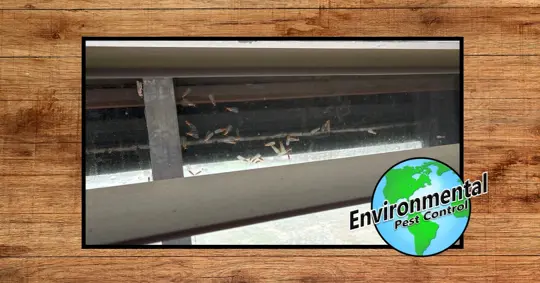
Recently, one of our techs discovered an active Drywood termite swarm right here in our service area (Southwest Oklahoma and Northwest Texas).
While we have treated isolated cases of Drywood termites a couple of times in the past—usually transported here in furniture or salvaged wood—we have never witnessed a live Drywood swarm in this region.
This discovery is a major milestone for local property owners. It means termite behavior is shifting, and the assumptions we’ve made about protecting our homes need to evolve. Here is what you need to know about this rare find, how these pests differ from our usual local threats, and why a new danger is slowly marching our way.
The Big Three: Understanding the Termites in Our Area
To protect your home, you have to know what you're up against. In our part of Oklahoma and Texas, we are now dealing with three distinct termite threats, each requiring entirely different treatment strategies.
1. Subterranean Termites: The Primary Local Threat
For decades, Subterranean termites have been the reigning champions of property damage in SW Oklahoma and NW Texas.
- Where they live: They build their colonies deep underground in the moisture-rich soil.
- How they attack: They cannot survive long exposure to the open air, so they build specialized mud tubes up your foundation walls to safely travel from the dirt into your home's framing.
- The damage: They eat the soft growth rings of wood, damaging your home from the ground up and leaving a distinct layered look inside the timber.
2. Drywood Termites: The Rare Above-Ground Invaders
Our recent swarm sighting changes how we look at Drywood termites. They no longer just get accidentally shipped here; they are actively attempting to colonize.
- Where they live: Unlike their subterranean cousins, Drywood termites do not need any contact with the soil. They live entirely inside the wood they consume.
- How they attack: A swarm of winged termites (alates) lands directly on your home—often entering through attic vents, roof lines, or window joints—and begins boring straight into the wood.
- The damage: They eat across the wood grain, creating smooth, clean chambers. Because they don’t use mud, they keep their tunnels clean by kicking out tiny, sand-like fecal pellets (frass). If you see tiny piles of what looks like sawdust or pepper beneath a wooden beam, you are likely looking at a Drywood infestation.
3. Formosan Termites: The Rising Aggressor
While we keep a close eye on Drywood termites, there is another shadow on the horizon. Formosan termites—a highly destructive species of subterranean termite—are slowly heading north into Oklahoma.
- The Danger: Formosan termites are often referred to as "super termites." Their colonies are massive, sometimes containing millions of individuals compared to the hundreds of thousands found in standard subterranean colonies.
- The Appetite: Because of their sheer numbers, they can cause severe structural damage to a home in a matter of months rather than years. They are incredibly aggressive and can even create "aerial colonies" on roofs if there is a consistent water leak.
Why One Size Does Not Fit All for Treatment
The reason this swarm matters so much comes down to how we treat them. If a pest control company treats a Drywood termite problem using Subterranean methods, the treatment will completely fail.
Because Subterranean termites live in the ground, we protect your home by creating a continuous liquid barrier in the soil or using specialized bait stations around the perimeter. This stops them from ever making it from the dirt to your house.
But because Drywood termites fly directly into your structure and live entirely above ground, soil treatments do absolutely nothing to stop them. Treating Drywood termites requires targeted wood injections, specialized localized treatments, or, in severe cases, whole-structure structural fumigation.
What You Should Do Next
With local termite patterns changing, vigilance is your best defense. We recommend taking a few immediate steps to protect your property:
- Check the attic and eaves: Look for small, mysterious piles of sand-like pellets or discarded insect wings near windowsills and rafters.
- Seal entry points: Ensure attic vents are screened properly and caulk any visible gaps around your roofline.
- Don't guess, get a professional eye: Because Drywood termites don't leave obvious mud tubes, they can hide deep inside your walls undetected for years until significant damage is already done.
As a local, family-owned business, our reputation is built on keeping our neighbors safe. We stay on top of these shifting pest trends so you don't have to worry.