
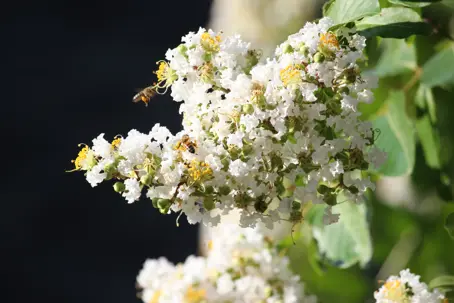
Every third Saturday in August marks the annual celebration of National Honey Bee Day. First established by United States beekeepers in 2009, this special day serves a dual purpose. It honors the incredible honey bee for its massive contributions to our ecosystem and recognizes the hard-working beekeepers who tend to the hives.
As a small, family-owned pest control company, people often ask us why we care so much about bees. The answer is simple: our business is rooted in protecting families and the local environment. Honey bees are not pests. They are essential partners in nature. Nearly one-third of the food we eat relies on pollination, and honey bees do the heavy lifting for crops, gardens, and wild plants right here in our community.
Our Commitment to Pollinator Protection Best Management Practices
While structural uses of insecticides do not inherently pose a significant risk to honey bees, we believe in being actively proactive. Our company strictly follows the Pollinator Protection Best Management Practices (BMPs) developed by industry experts like the National Pest Management Association (NPMA) in conjunction with state and federal regulatory strategies.
Here is how we put these professional best practices into action on your property:
- Strict Label Compliance: As a rule, language on insecticide labels supersedes all other instructions. Adhering exactly to these labels is proven to reduce the likelihood of unintended effects on non-target organisms.
- Customized Applications: We know that every yard and scenario is completely unique. A one-size-fits-all approach does not work, so we customize our applications to fit your specific environment.
- Targeted Placements: We train our technicians to identify beneficial insects and use precise application methods. This keeps structural treatments entirely away from the flowering plants where bees actively forage.
How You Can Help Honey Bees at Home
You do not need to be a professional beekeeper to make a positive impact. Every landscape—from a small window box to corporate campuses, farms, and roadside corridors—presents a meaningful habitat opportunity. You can support local pollinators with a few intentional adjustments:
- Plant native flowers for pollinators: Utilize flowers, shrubs, and trees that are native or non-invasive to your specific area. Always plant in dense clusters to create an easy visual "target" for pollinators to find. Ensure your selection offers a continuous bloom throughout the growing season from spring to fall. For the best layout, choose a garden site that is sheltered from heavy winds, receives at least partial sun, and has access to water. To explore a network of helpful gardeners and discover more habitat ideas, visit the Bee Friendly Gardening Guide.
- Provide nesting sites: Not all bees live in managed hives. Help wild, native bees by leaving some dead branches and logs on your property as natural nesting sites. Just be sure to keep them as far away as you can from your home and any other buildings on your property as you don't want to encourage pests like termites to live near your structures. You can also reduce your use of wood mulch to leave small patches of bare ground for ground-nesting bees, or install wood nesting blocks for wood-nesting native species.
- Provide a safe water source: Set out a shallow birdbath filled with pebbles or corks. This gives bees a dry place to land and drink safely without risk of drowning. Dumping the water out every 7 days and replacing it with fresh water will help prevent mosquitos from taking advantage of your generosity.
- Support local bees and beekeepers: When shopping, buy local honey to directly support the independent beekeepers managing hives in our community. Educational coalitions like the Honey Bee Health Coalition offer excellent community resources on sustainable bee management.
- Hire proactive professionals: When managing structural and landscape pests, always choose a professional company like Environmental Pest Control that actively incorporates pollinator BMPs and stays updated on state protection plans.
What to Do If You Find a Bee Scrum
If you notice a large cluster of bees hanging from a tree or a structure on your property, do not panic. This is a natural process called swarming, where a colony looks for a new home. Swarming bees are generally docile because they are protecting their queen and have no hive to defend.
Instead of treating them, reach out to a local beekeeping association. Local beekeepers are usually eager to come out and safely relocate the scrum to a managed apiary where the bees can thrive.
Thank you for helping us support our local ecosystem. From our family to yours, happy National Honey Bee Day.